Chicago is a city built on broad shoulders and bold architecture. While our skyscrapers get much of the global attention, the true character of the city lives in its neighborhoods. From the “Bungalow Belt” to the historic streets of the Gold Coast, Chicago’s residential architecture is a timeline of its growth, diversity, and history.
If you are walking through the city’s diverse communities, you will spot distinct architectural styles that define the local vibe. Here is a guide to the classic home styles that make Chicago unique and where you can find them.
The Chicago Bungalow
Where to find them: Dunning, Portage Park, Chatham, West Ridge
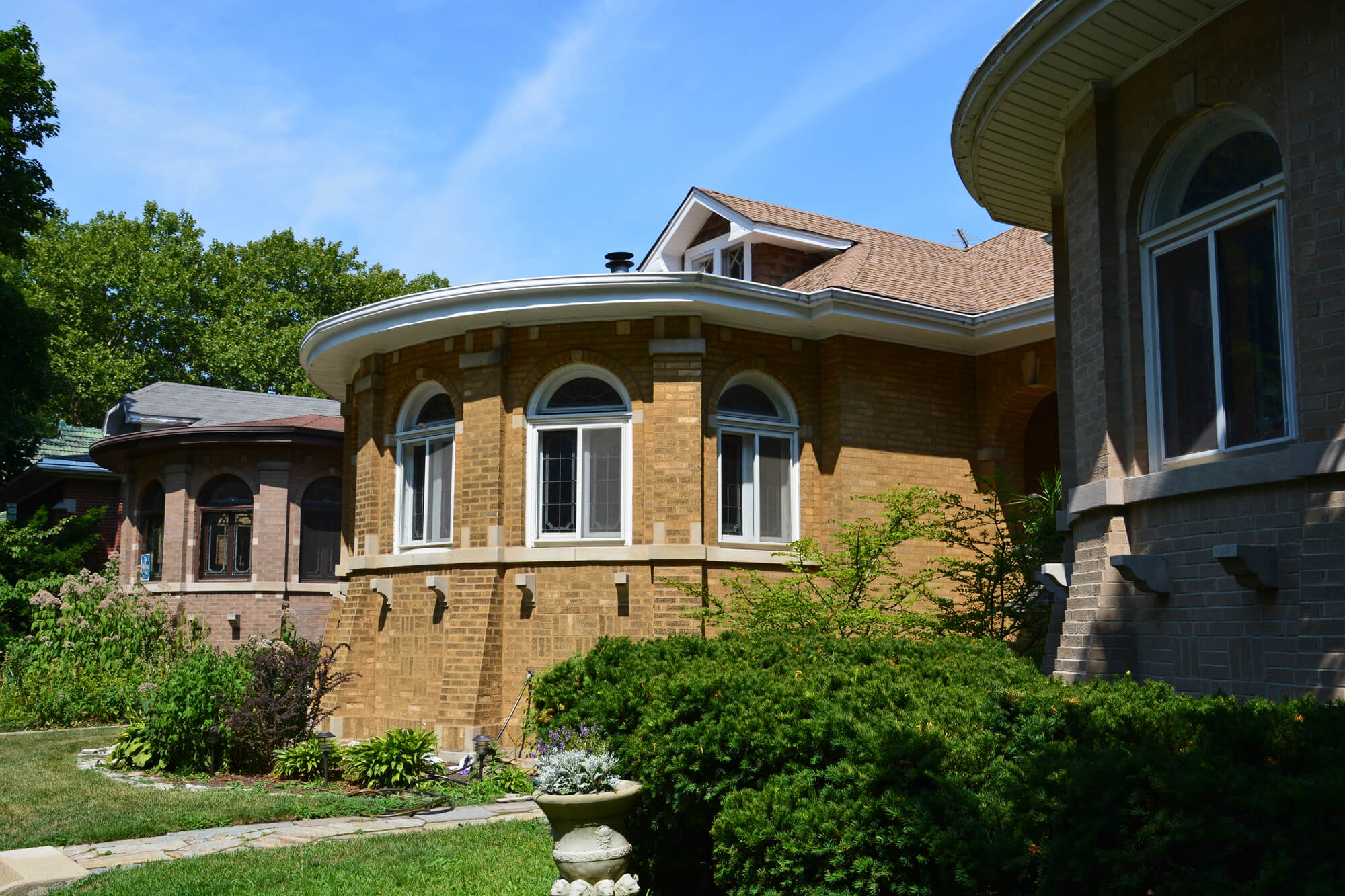
Perhaps the most iconic of all Chicago homes is the humble yet sturdy Chicago Bungalow. Built primarily between 1910 and 1940, these homes were designed to be affordable for the working class while offering high-quality craftsmanship.
You can spot a classic Chicago Bungalow by its brick construction, one-and-a-half stories, and low-pitched roof with wide overhangs. They almost always feature a generous front porch (often enclosed) and a limestone detailing. Inside, you will typically find beautiful woodwork and stained glass. These homes are so integral to the city’s identity that a “Bungalow Belt” stretches across the outer neighborhoods, creating a visual unity that ties vast parts of the city together.
Workers Cottages
Where to find them: Logan Square, Pilsen, Wicker Park, Bridgeport
Before the bungalow, there was the workers cottage. These simple, gabled-roof homes were the backbone of housing for the immigrants and laborers who rebuilt Chicago after the Great Fire of 1871.
Workers cottages are typically narrow, one-and-a-half-story wood-frame or brick buildings. They have a high-pitched roof facing the street and often sit on a raised basement. While modest in size, many have been lovingly restored or modernized inside. In neighborhoods like Logan Square and Pilsen, these cottages provide a charming, human-scale contrast to larger multi-unit buildings.
Greystones (and Brownstones)
Where to find them: Gold Coast, Logan Square, Bronzeville, Lincoln Park
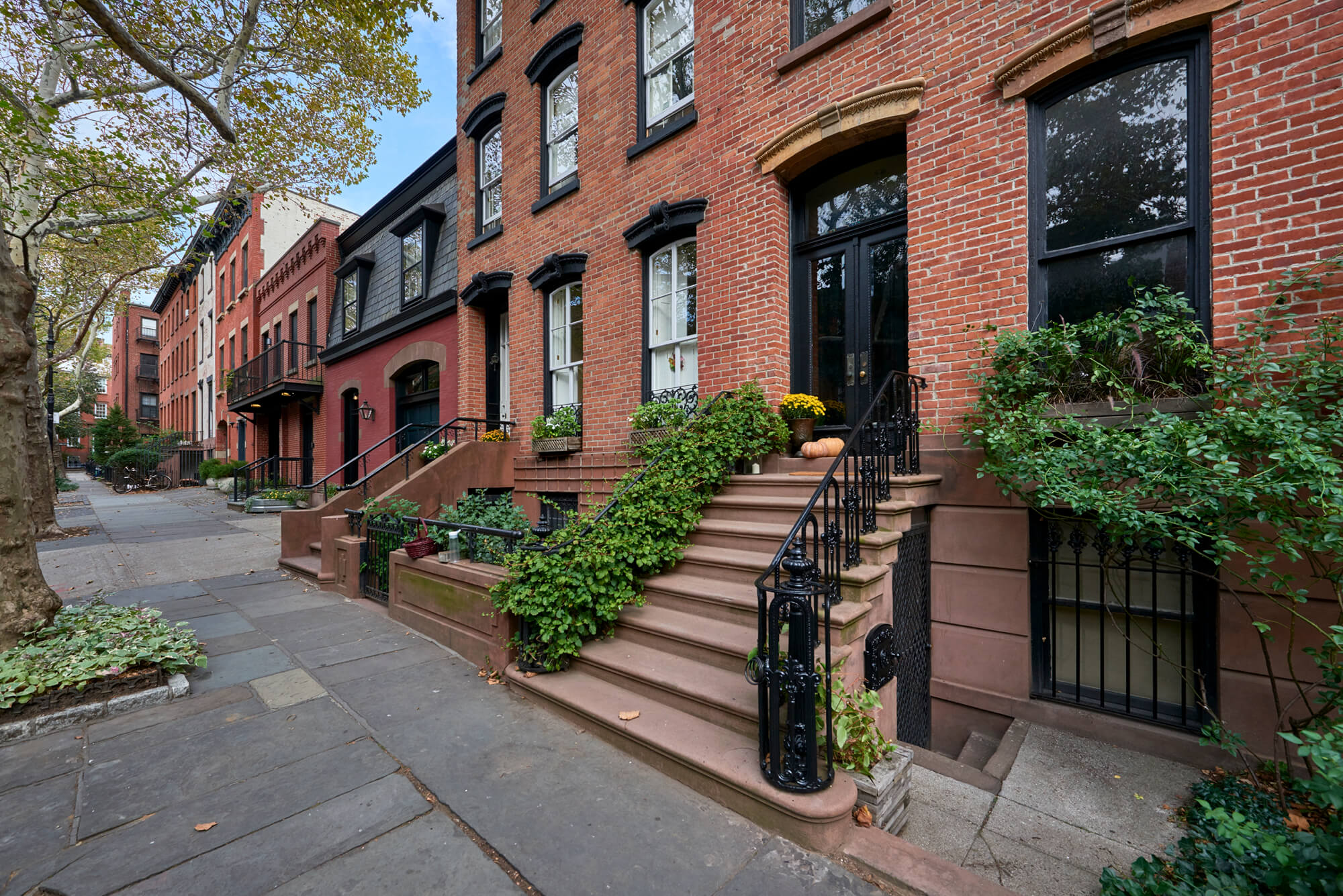
While New York has its Brownstones, Chicago has the Greystone. Though the prompt mentions Brownstones—which do exist here—the locally quarried limestone from Bedford, Indiana, gave Chicago its distinct grey-hued version of the row house.
These stately structures were built roughly between 1890 and 1930. They radiate elegance and durability, often featuring Romanesque arches and intricate stone carving around the doorways. You will find beautiful concentrations of these along the boulevards in North Lawndale and the historic streets of Bronzeville. They represent a time when the city was asserting its permanence and wealth.
Row Homes
Where to find them: Pullman, Lincoln Park, Near North Side
Row homes in Chicago offer density without sacrificing individual identity. Unlike the detached nature of bungalows, row homes share side walls. The historic Pullman neighborhood is a perfect living museum for this style. Built as a company town in the 1880s, the row homes there are uniformly beautiful, constructed of brick with varied rooflines to break up the visual monotony.
In Lincoln Park, row homes tend to be more upscale and varied, ranging from vintage brick structures to modern reinterpretations. They offer a tight-knit community feel and are highly efficient in their use of city space.
Victorian Homes
Where to find them: Old Irving Park, Hyde Park, Kenwood
For a touch of ornate drama, look no further than Chicago’s Victorian homes. “Victorian” actually covers a few sub-styles (like Queen Anne), but they generally share a love for asymmetry, vibrant colors, and elaborate detailing.
These homes often feature wrap-around porches, turrets or towers, bay windows, and “gingerbread” trim. Hyde Park and Kenwood are treasure troves for this style, boasting massive, colorful estates that transport you back to the late 19th century. They serve as a reminder of the era’s taste for eccentricity and craftsmanship.
Italianate Homes
Where to find them: Wicker Park, Lincoln Park, Ukrainian Village, Lakeview
The Italianate style is one of the oldest surviving styles in the city, popular in the mid-to-late 1800s. These homes were inspired by the villas of Italy but adapted for the urban American landscape.
You can identify an Italianate home by its tall, narrow windows (often with curved tops), wide eaves supported by decorative corbels (brackets), and a low-pitched or flat roof. They have a vertical, stately appearance. In Wicker Park, you can see grand masonry examples that were once home to the city’s wealthy merchants, standing proudly alongside modern developments.
Modern Farmhouse
Where to find them: North Center, Roscoe Village, West Town
While not a “historic” style in the traditional sense, the Modern Farmhouse has become a ubiquitous part of Chicago’s 21st-century architectural landscape. As older frame homes are renovated or replaced, this style has surged in popularity.
Characterized by white vertical siding (board-and-batten), contrasting black window frames, and steep gabled roofs, these homes blend rustic cues with clean, modern lines. They are especially popular in family-centric neighborhoods like Roscoe Village and North Center. While sometimes controversial for replacing older housing stock, they represent the current chapter in how Chicago families define “home”—prioritizing open floor plans and modern amenities while nodding to traditional forms.